09 June 2026 · Admin
Enterprise Server Components That Matter
A failed P440ar controller, an undersized PSU, or the wrong DIMM rank can turn a routine upgrade into avoidable downtime. That is why enterprise server components need to be specified properly from the outset, especially when you are extending the life of HPE Gen9, Gen10 or Dell 12th to 14th generation platforms rather than replacing them outright.
For most infrastructure teams, component buying is not a theoretical exercise. It sits somewhere between break-fix urgency, budget control and lifecycle planning. The practical question is rarely which server is best in general. It is whether a given processor, memory kit, drive type or power supply matches the installed estate, the workload and the support window you still need from the platform.
What enterprise server components actually determine
In a production server, components do not contribute equally. Some define baseline platform capability, while others shape performance, resiliency or future upgrade headroom. Understanding that distinction matters when you are buying refurbished parts, because the right value is usually found in the component that removes a bottleneck without forcing a wider refresh.
For buyers planning this kind of deployment, CISCO UCSB-B480-M5-WDB - UCS B480 M5 CTO BLADE SERVER W/O DRIVE BAYS - Refurbished is a relevant option to consider. Please check the listed specification, condition and compatibility before ordering.
Processors set the ceiling for core count, cache, memory support and in some cases PCIe capability. In dual-socket HPE ProLiant or Dell PowerEdge systems, CPU choice also affects whether the second processor is required to enable additional memory channels or expansion resources. A low-cost CPU swap can improve consolidation density, but only if thermal profile, firmware level and socket compatibility line up with the chassis and motherboard revision.
Memory tends to be the first upgrade considered in virtualised estates, and with good reason. On many older but still widely deployed enterprise platforms, insufficient RAM limits VM placement long before CPU becomes the constraint. Even then, memory procurement is not simply a matter of capacity. Buyers need to check DDR generation, speed, ECC type, DIMM size, rank, registered versus load reduced format, and supported population rules for the specific server model.
Storage is where the trade-off between cost and performance becomes most visible. Nearline SAS, SAS and SSD options each suit different jobs. Boot volumes, VM datastores, backup repositories and database workloads should not be treated as interchangeable use cases. The drive itself is only part of the decision. Backplane compatibility, carrier format, controller support and RAID cache configuration all affect the final result.
Power supplies are often treated as commodity replacements until they fail under load or introduce redundancy issues. In practice, wattage, efficiency rating and hot-plug form factor need to match the server exactly. A mismatched PSU is not just inconvenient. It can prevent proper failover in an N+1 configuration or leave no margin for added CPUs, memory or accelerator cards.
Enterprise server components by priority
If the goal is to keep an existing server estate productive, some component categories deserve more scrutiny than others.
Processors and platform balance
CPU upgrades make sense when the server still has useful life in the chassis, memory standard and storage subsystem. That is common in HPE Gen9 and Gen10 or Dell Gen13 and Gen14 estates where a business wants more compute without changing platform. It becomes less attractive when the higher-spec processor pushes up power draw and heat while the rest of the server remains constrained by older storage or limited RAM population.
There is also the licensing question. In some environments, adding cores can increase software cost faster than it improves workload efficiency. For virtualisation hosts or application stacks tied to per-core licensing, the better move may be faster cores, more memory or storage optimisation rather than the largest supported CPU.
Memory and upgrade efficiency
RAM upgrades are usually straightforward only on paper. In reality, population order, channel balance and supported frequencies all matter. Mixing speeds or capacities can force the server to run memory below its maximum supported rate. Mixing DIMM types is often not supported at all.
For buyers maintaining a standardised estate, consistent part selection across nodes reduces both troubleshooting time and spares complexity. That matters in branch deployments and MSP environments where a single unsupported memory mix can create a disproportionate support burden.
Storage drives and controllers
Drive replacement is one of the most common procurement tasks, but it is also where specification errors happen most often. Form factor, interface and firmware expectations need to be checked before purchase. A 2.5 inch SAS SSD, a 3.5 inch nearline SAS HDD and a SATA SSD may all fit different operational goals, but they are not drop-in substitutes across every server or controller.
Controllers deserve equal attention. If the existing RAID card lacks cache, battery-backed write capability or support for larger drives, simply adding new disks may not deliver the expected outcome. In many cases, storage performance problems blamed on the drives are really controller or cache limitations.
Power supplies and resiliency
Redundant power is a baseline requirement in most enterprise deployments, but replacement buying still needs care. HP/HPE and Dell both use generation-specific and chassis-specific PSU options, and the correct spare is rarely determined by wattage alone. Buyers should confirm output class, efficiency level and exact fitment for the model in question.
If the server has already been expanded with extra memory, additional drives or a second processor, reassessing PSU capacity is sensible. A power budget that was acceptable in the original configuration may no longer leave safe headroom.
Buying refurbished enterprise server components
For most commercial buyers, refurbished parts are not a compromise if they are sourced correctly. They are a practical way to keep proven platforms in service, reduce refresh cost and source hardware that may no longer be available new. The key is to buy against exact compatibility rather than broad product category labels.
Part number accuracy matters more than generic description. A listing that identifies server family, generation, capacity and speed is useful. A listing that also provides specific HP/HPE or Dell part references, controller compatibility or tray type is far more useful. That level of detail reduces the risk of ordering delays, returns and failed maintenance windows.
Condition and testing standards also matter, but they should be viewed through the lens of operational fit. A refurbished 32GB RDIMM from the correct generation and speed class is valuable because it allows an existing node to be upgraded on budget. A cosmetically cleaner but less precisely specified part is less useful if it creates configuration inconsistency.
This is where specialist suppliers have an advantage over general IT resellers. Buyers maintaining enterprise estates usually need matching components for specific server families rather than a broad marketplace selection. A focused stock profile around HP/HPE and Dell generations is often more useful than a wider catalogue with less precise server coverage.
Common mistakes when sourcing enterprise server components
The first mistake is buying to a server brand without buying to the exact generation and model. HPE ProLiant compatibility is not universal across generations, and neither is Dell PowerEdge compatibility. The second is assuming a component will operate at its labelled specification once installed. Memory speed, drive performance and CPU capability can all be reduced by the surrounding platform.
Another common issue is treating upgrades as isolated events. Adding faster drives to an older controller, or fitting more memory without checking processor support and channel population, can limit the benefit. It is usually better to assess the server as a platform rather than as a stack of independent parts.
The final mistake is ignoring the spares strategy. If a business runs multiple identical servers, standardising on the same controller, drive type, PSU model and DIMM specification simplifies support and reduces stockholding complexity. Mixed component estates can be managed, but they cost more in time than buyers often expect.
When to upgrade and when to replace
It depends on what is constraining the environment. If the chassis, motherboard and generation still support the workload, component upgrades are often the most commercially sensible route. More RAM, a better RAID controller, additional SSD capacity or a matched CPU upgrade can add meaningful service life at a fraction of the cost of a new build.
Replacement becomes more likely when several constraints stack up at once - ageing processors, limited memory ceiling, outdated controller options, rising power inefficiency and poor parts commonality. At that point, continuing to patch the platform may cost more over time than moving to a later refurbished generation with better density and upgrade headroom.
For many UK buyers, the right answer sits in the middle. Keep stable server platforms in service with carefully matched refurbished components, and reserve full replacement for systems where the upgrade path has narrowed too far. That is usually the most practical way to balance uptime, budget and procurement lead times.
When you buy enterprise hardware this way, the component is not just a spare part. It is a decision about how long a platform stays useful, how quickly a fault can be resolved and how much value remains in the estate you already own.
Explore related products
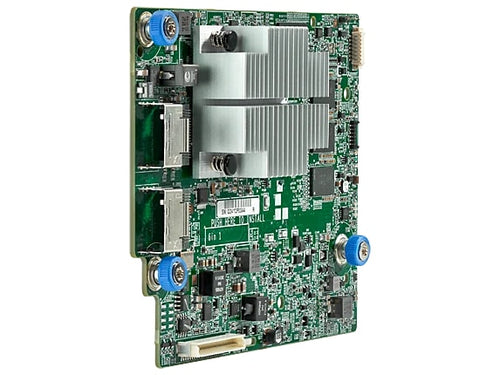
HP 749796-001 - SMART ARRAY P440AR/2GB FBWC 12GB DUAL-PORTS INT SAS CTRL - New
DELL TD2NM-LP - PERC H330+ 12GB/S LOW PROFILE SAS RAID CONTROLLER - LPB - Refurbished
DELL TCKPF-LP - H330 POWEREDGE PERC PCIE 12GB SAS RAID CONTROLLER - New
DELL CG2YM-WB - PERC H330 12GB SAS 6GB SATA PCI-E RAID CONTROLLER NO BRKT - Refurbished