
11 September 2026 · Admin
Best Dell Gen14 Models for UK Server Estates
A Dell Gen14 purchase is rarely a question of selecting the highest specification available. The best Dell Gen14 models are those that match the workload, rack density, storage layout and support plan of the existing estate. For many UK businesses, refurbished PowerEdge 14th-generation hardware remains a practical route to dual-socket compute, DDR4 capacity and flexible NVMe or SAS storage without the cost of a new platform.
Dell's Gen14 range includes compact 1U servers, general-purpose 2U platforms, storage-led variants and four-socket systems. Processor, backplane and riser configuration matter as much as the chassis badge. A low-cost R740 with an eight-bay 3.5-inch chassis is not interchangeable with a 16-bay 2.5-inch R740, even though both may be listed under the same base model.
Best Dell Gen14 Models by Workload
Dell PowerEdge R640 for dense virtualisation
The PowerEdge R640 is a strong choice where rack space is constrained but dual-socket compute is still required. This 1U platform supports Intel Xeon Scalable processors, up to 24 DDR4 DIMMs and a range of front storage configurations. It is particularly suited to virtualisation nodes, web hosting, application servers and clustered infrastructure where storage is provided externally or local drive capacity is moderate.
For buyers planning this kind of deployment, DELL DELL-R740-24SFF - DELL Poweredge R740Xd (24Sff) Configured to Order - Refurbished is a relevant option to consider. Please check the listed specification, condition and compatibility before ordering.
Its principal benefit is density. Two processors and substantial memory capacity in 1U allow an MSP or data centre operator to consolidate a sizeable number of virtual machines without consuming 2U per host. With the right risers, it can also support useful PCIe expansion for high-speed networking, HBAs or NVMe configurations.
The trade-off is serviceability and expansion space. A 1U chassis offers less room for full-height cards and large numbers of local drives than an R740. Buyers planning multiple GPUs, several PCIe cards or a large internal storage pool should assess the riser layout before purchasing rather than relying on the base R640 specification.
Dell PowerEdge R740 for general-purpose infrastructure
For many server estates, the R740 is the most versatile Dell Gen14 platform. It is a dual-socket 2U server with broad memory, storage and PCIe expansion options, making it suitable for virtualisation, line-of-business applications, database services, backup repositories and mixed-use workloads.
The 2U form factor gives the R740 a practical advantage over the R640 when future changes are likely. It can accommodate more expansion cards, higher-capacity drive arrangements and, in appropriate configurations, GPU acceleration. That flexibility is useful for organisations replacing older Dell Gen12 or Gen13 systems while retaining a mixture of SAS, SATA and SSD storage.
Configuration is the deciding factor. Check the number and type of front bays, fitted backplane, PERC controller, RAID cache and battery or supercapacitor, network daughter card, power supply wattage, and installed risers. A server configured for eight 3.5-inch drives will suit bulk storage differently from a chassis populated with 2.5-inch SSD bays for transactional workloads.
Dell PowerEdge R740xd for storage-heavy deployments
The R740xd is the storage-focused alternative to the standard R740. It retains the dual-socket Gen14 architecture but is designed around greater local disk capacity. Depending on the chassis and backplane, it can support a high number of 2.5-inch or 3.5-inch drives, making it suitable for backup, archive, video retention, software-defined storage and virtualisation hosts that require substantial local capacity.
For a backup target or disk-based archive, the 3.5-inch version is often the more economical route because high-capacity SATA or SAS hard drives provide a lower cost per terabyte. For databases, VM datastores or high-IOPS applications, 2.5-inch SSD or NVMe-led configurations are normally the better fit. The chassis should follow the storage media plan, not the other way round.
There are limits to consider. Adding large quantities of drives increases power draw and cooling requirements, while RAID rebuild times and controller capability become more significant as array sizes grow. If the workload requires consistent low latency, confirm whether the installed controller and backplane support the intended NVMe arrangement rather than assuming every drive bay is interchangeable.
Dell PowerEdge R440 for efficient branch and edge workloads
The PowerEdge R440 is a compact 1U dual-socket model aimed at organisations that need enterprise features without the physical capacity of an R640 or R740. With support for Intel Xeon Scalable processors and DDR4 memory, it remains capable for branch office services, edge deployments, domain services, monitoring, light virtualisation and appliance-style workloads.
It is a sensible option when predictable operating cost and rack density matter more than extensive expansion. A correctly specified R440 can comfortably handle several infrastructure virtual machines or a dedicated business application. It also provides a clear upgrade path over older 12th- and 13th-generation entry systems.
The constraint is straightforward: it has fewer memory slots, drive options and PCIe resources than the larger models. Do not select it for an estate expected to grow rapidly in local storage or accelerator requirements. The lower entry cost is valuable only if the chassis will remain fit for purpose for the planned lifecycle.
Dell PowerEdge T640 for office and non-rack environments
Not every server belongs in a data centre. The PowerEdge T640 is a tower server designed for sites without a dedicated rack, including offices, warehouses, retail locations and local engineering facilities. It offers dual-socket processing, considerable memory capacity and flexible internal storage while maintaining enterprise management features.
A T640 can be a good replacement for an older tower server where local file services, backup, CCTV retention or on-site applications must remain available. Its tower format can reduce the need for a separate rack installation, although acoustic output, cooling and secure physical placement still need consideration.
It depends on the location. Where there is an existing comms cabinet or an expected move to a centralised data centre, a rack-mounted R740 or R740xd generally provides a neater long-term route. The T640 is most compelling where the physical environment genuinely favours a tower chassis.
Dell PowerEdge R840 and R940 for high-memory compute
The R840 and R940 address workloads that need more than two processors or unusually high memory capacity. Both are four-socket Dell Gen14 platforms built for demanding database, ERP, analytics and large virtualisation environments. They support significantly more DIMMs than dual-socket systems and can be configured with substantial processor core counts.
The R840 provides four-socket compute in 2U, making it attractive where high core density is required. The R940 uses a larger chassis with extensive memory and I/O capability, suiting workloads where scale-up architecture remains preferable to spreading services across several hosts.
These systems should not be bought merely because they are available at an attractive refurbished price. Four-socket licensing, power consumption, cooling and processor matching can materially change the total cost. In many standard virtualisation deployments, two well-configured R740 nodes may be easier to maintain and more resilient than one large R940. Scale-up remains appropriate where the application architecture, memory requirement or licensing model justifies it.
Dell Gen14 Model Comparison at a Glance
| Model | Form factor | Best suited to | Main consideration |
|---|---:|---|---|
| PowerEdge R440 | 1U | Branch services, appliances, light virtualisation | Limited expansion versus larger systems |
| PowerEdge R640 | 1U | Dense virtualisation and compute | Check risers and storage configuration |
| PowerEdge R740 | 2U | General-purpose infrastructure | Verify bays, controller and expansion cards |
| PowerEdge R740xd | 2U | Backup, archive and storage-heavy workloads | Match backplane to SAS, SATA or NVMe plan |
| PowerEdge T640 | Tower | Office, warehouse and non-rack sites | Consider acoustics and future rack requirements |
| PowerEdge R840/R940 | 2U/3U | High-memory, four-socket workloads | Higher licensing, power and cooling costs |
What to Check Before Buying Refurbished Dell Gen14 Hardware
A base model number does not provide enough information for procurement approval. Start with the processor pair and confirm that both CPUs are identical in model, core count and speed. Then assess memory population. Balanced DIMM placement across processor channels is preferable to a large but unevenly configured memory total, particularly in virtualisation hosts.
Storage needs a separate review. Confirm the fitted drive caddies, backplane type, controller model and whether the server includes RAID cache protection. A PERC H730P or H740P may be appropriate for conventional hardware RAID, while an HBA or direct-attached arrangement may be preferred for certain software-defined storage designs. Also establish whether drives are included, their interface, capacity, endurance class and firmware state.
Network connectivity is often overlooked. A server supplied with standard 1GbE ports may require an additional 10GbE or 25GbE adapter for its intended role. Check available PCIe slots, riser part numbers and low-profile versus full-height card compatibility before specifying adapters. iDRAC Enterprise licensing can also be relevant where remote console access and hands-off management are required.
Finally, consider the existing estate. Standardising on a common Dell Gen14 model can simplify spares holding, firmware baselines and operational procedures. KahnServers can be particularly useful where a business needs a matched server, additional memory, replacement power supplies or storage components for an established Dell platform.
The right choice is usually the model with enough headroom for the next workload change, not the most highly specified chassis on the shelf. Define the compute, memory, storage and network requirement first, then select the Dell Gen14 configuration that meets it with sensible capacity still in reserve.
\nExplore related products
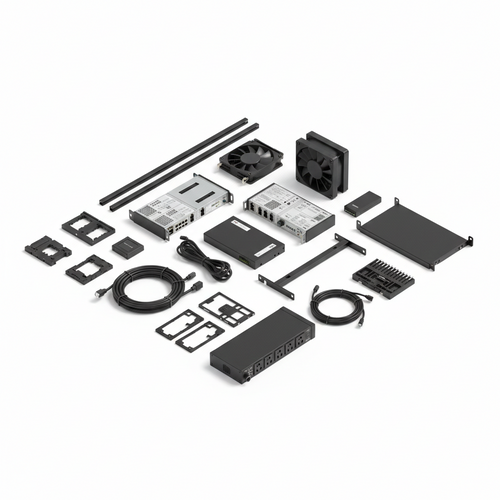
DELL DELL-R940-24SFF - Poweredge R940 (24Sff) Configured to Order - Refurbished
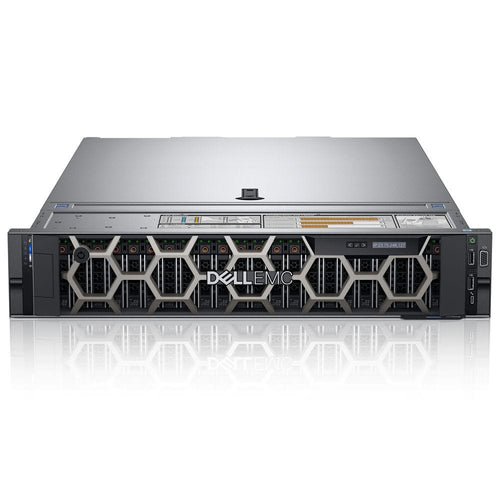
DELL DELL-R740-12LFF - Poweredge R740Xd (12Lff) Configured to Order - Refurbished
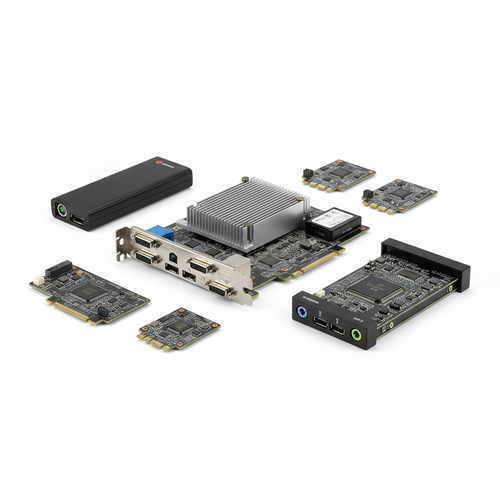
DELL PER440 ENT H740P LFF - PER440 PERC H740P 4*LFF CTO CHASSIS ENT LICENSE - Refurbished